
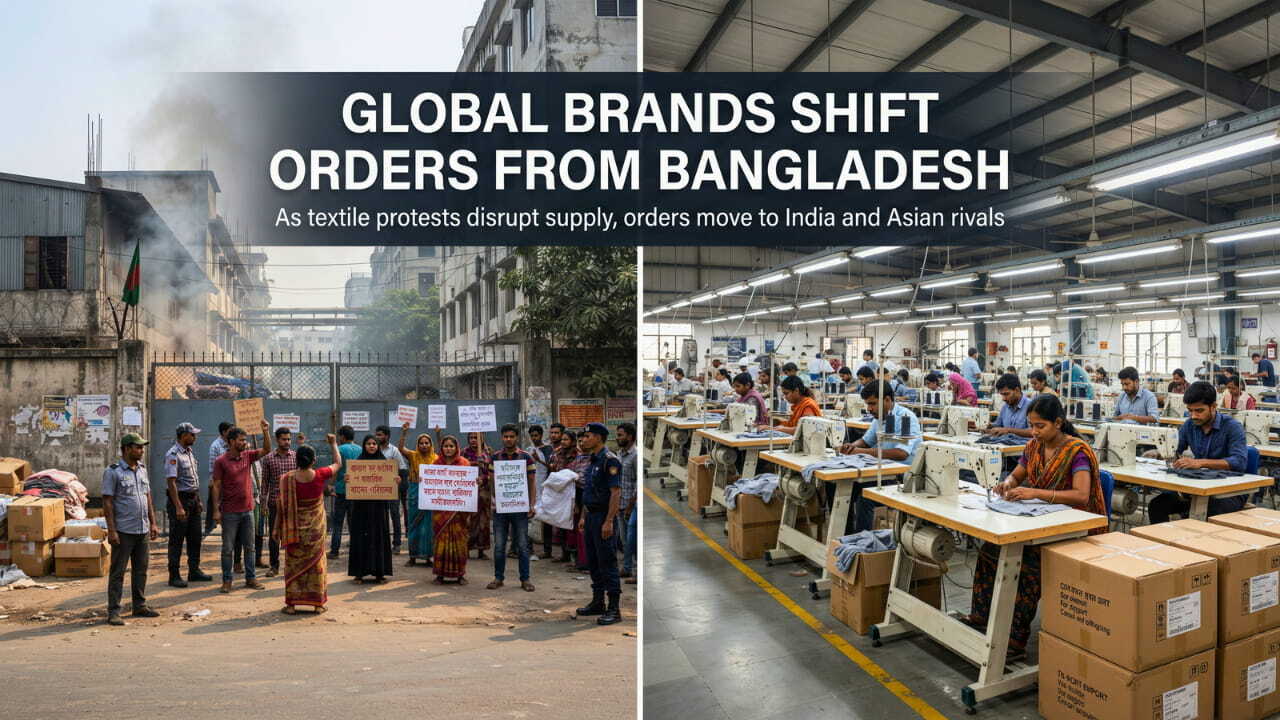

Bangladesh’s textile industry is facing a crisis amid labour protests and the already fragile situation. Global brands are now diverting their orders from Bangladesh to other Asian countries, such as India.
Some garment factory owners reported that in the first half of November, global fashion retailers like Zara and H&M shifted nearly a tenth of their monthly orders from Bangladesh to other Asian countries. According to these factory owners, labour protests are disrupting production, damaging Bangladesh’s reputation for low-cost, high-quality products.
These factory owners stated that between November 1st and 18th, these global brands shifted orders worth approximately ₹254 million from Bangladesh to other countries, with the majority of this business coming from India. This shift is a major blow to a key pillar of Bangladesh’s economy and is likely to persist even after the ongoing unrest subsides.
Industry experts say that Bangladesh, renowned for its low costs, is falling behind other countries due to rising wages, fuel shortages, and political uncertainty. Until recently, Bangladesh was the world’s second-largest garment exporter after China. But now, global brands are looking for alternatives.
According to the Bangladesh Garment Manufacturers and Exporters Association (BGMEA), these protests have caused manufacturing losses of over $400 million. The garment industry contributes over 80 per cent of Bangladesh’s total export revenue and provides approximately 40 per cent of manufacturing employment.
Experts say India has benefited the most from the loss of orders from Bangladesh. Furthermore, buyers are turning to Vietnam, Cambodia, and Indonesia to reduce supply chain risks and ensure more reliable supplies.
This pressure increased further on Wednesday, when Bangladesh approved a 36 per cent increase in the minimum wage for garment workers. However, this is the lowest increase in the last four decades.
Business under threat
Factory owners say the biggest concern is that lost orders could lead to future business losses. They said buyers are now wondering where to source their clothing.
Persistent fuel shortages are hampering production. The ongoing crisis in West Asia has worsened the situation. This has forced some factories to rely on more expensive power sources. Chaudhary said that when choosing suppliers, buyers are now prioritising delivery time over price.