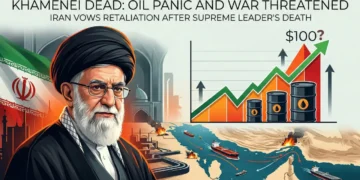

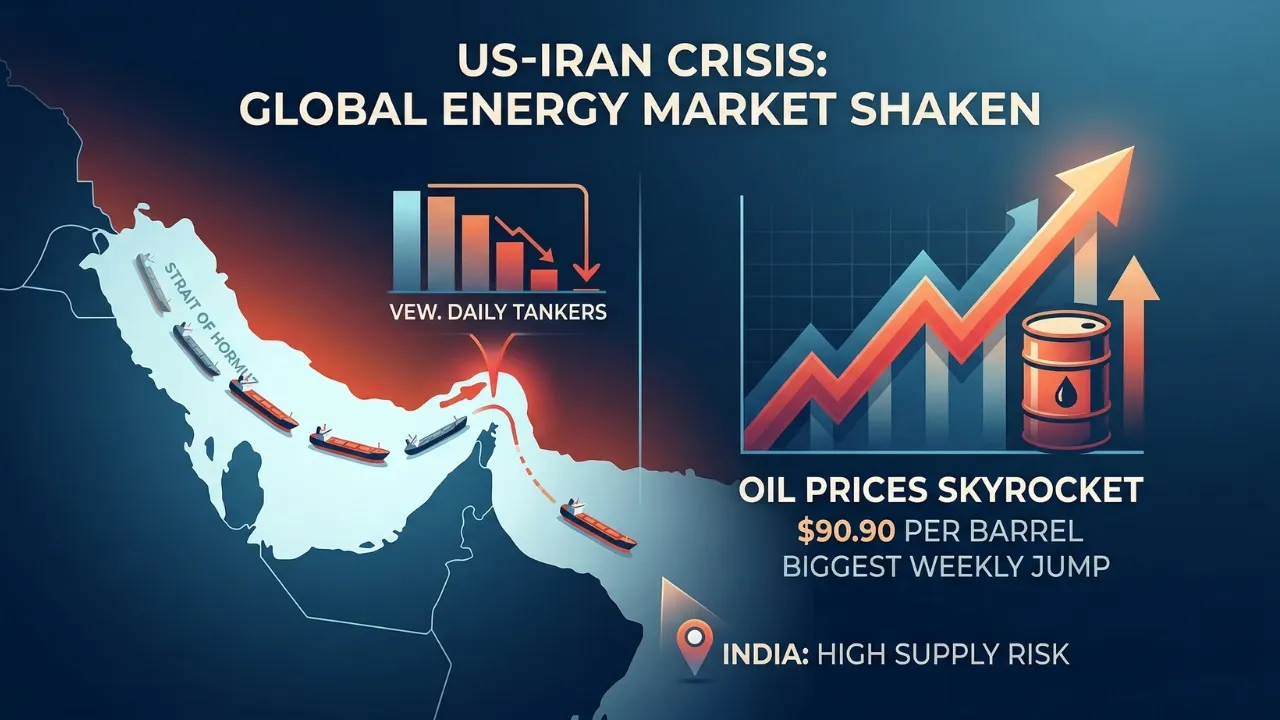
Since US President Donald Trump demanded Iran’s unconditional surrender, the global energy market has been shaken. WTI futures have jumped 12.2% to $90.90 per barrel. This is the biggest weekly increase in oil prices since April 2020.
According to market experts, the real fear is not an oil shortage, but the closure of the supply route. Nearly 20% of the world’s oil supply passes through this narrow route. According to recent data, while 60 tankers transited through Iran daily until recently, only 5 tankers passed through on March 1st. This means the supply chain has been completely disrupted.
Alarm bells for India
India is the world’s third-largest oil importer. Although India has shifted its dependence on Russia and 40 other countries over the past few years, 40% of its oil imports still pass through the Strait of Hormuz. India imports approximately 5.5 million barrels of oil daily, of which 2 million come through the Strait of Hormuz.
If this route is closed for a long time, India’s import costs will skyrocket, directly impacting domestic petrol, diesel, and food (due to increased transportation costs).
Is this the biggest supply shock ever?
Experts at S&P Global Energy say this situation could escalate into the biggest oil supply shock in history. Previously, Iran had not targeted energy infrastructure, but attacks on facilities in Qatar and Saudi Arabia have added fuel to the fire.
What will happen next?
The market is volatile, and until a diplomatic solution to the conflict is found, crude oil prices will continue to fluctuate. For now, the world is in a wait-and-see mode, but this is a serious warning for countries like India.