
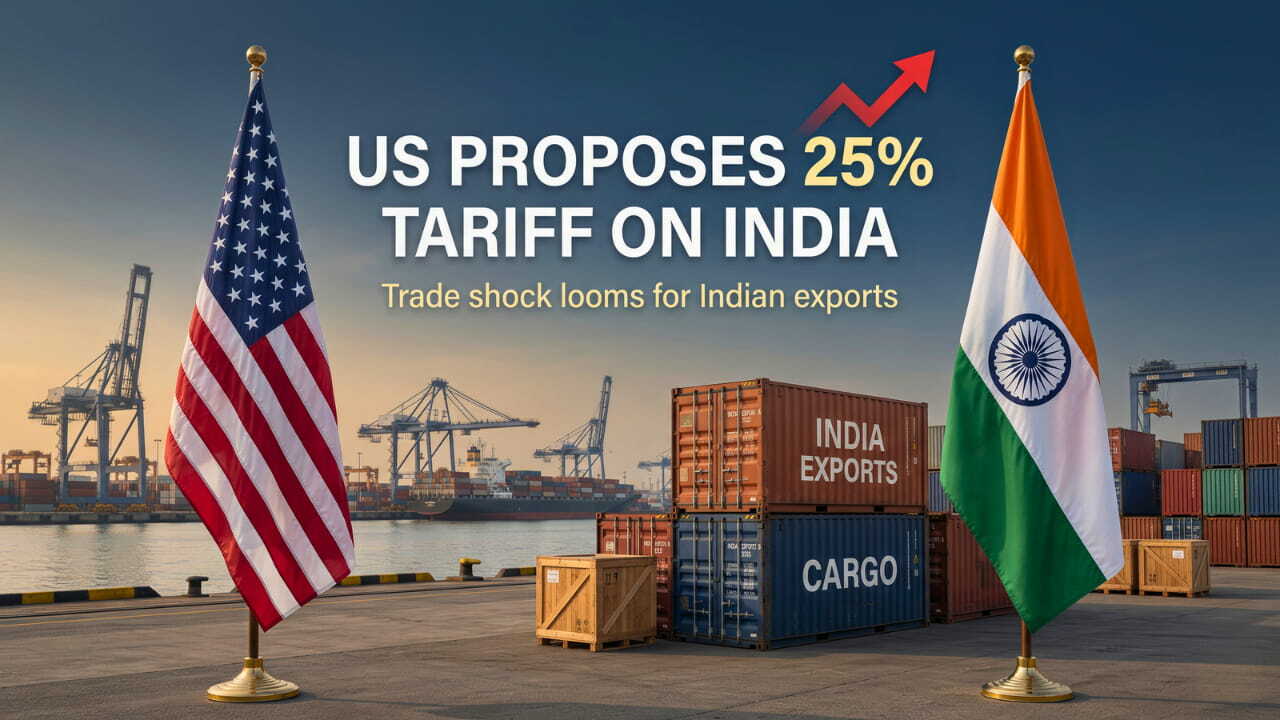

The US proposal to impose new tariffs on Indian goods has once again raised concerns among exporters. The US has proposed imposing additional Section 301 import duties on 14 countries, including India. India is poised to impose tariffs of up to 25%. However, if a trade agreement is reached between India and the US, this rate could be reduced to 17%.
According to a report by brokerage firms Emkay Global and Choice Institutional Equities, the new tariff proposal has weakened India’s position compared to most Asian countries. However, due to the exemption of several key products from tariffs, the actual impact on Indian exports may be less than anticipated.
Higher Tariffs on India Compared to Asian Countries
During the last tariff imposition, India’s position was better than many Asian countries. However, the new proposal has changed the situation. The US has proposed imposing 18% tariffs on Bangladesh, Indonesia, Malaysia, and Thailand. At the same time, this rate is 15% on Japan, South Korea, and Taiwan.
The lower tariffs imposed on these countries compared to India could pose a significant price challenge to Indian goods in the US market.
How much tariff is proposed on which country?
| Country | Proposed tariff |
|---|---|
| Vietnam | 35% |
| India | 25% |
| China | up to 20 |
| Bangladesh | 18% |
| Indonesia | 18% |
| Malaysia | 18% |
| Thailand | 18% |
| Japan | 15% |
| South Korea | 15% |
| Taiwan | 15% |
Although the proposed new tariff rate on China is lower than India’s, China’s total tariff burden is significantly higher due to existing tariffs.
Which industries will be most affected?
According to brokerage reports, the new US tariffs could have the greatest impact on exports of textiles, gems and jewellery, and marine products, including fish. Indian companies already face stiff competition from other Asian countries in these sectors. Higher tariffs could make Indian goods more expensive in the US market. This is likely to impact orders and profits for Indian exporters.
However, India may find relief as electronics, pharmaceuticals, and energy products are largely exempt from the new tariffs. Furthermore, products already subject to Section 232 duties have been exempted from the new tariffs. This is why brokerage firms believe the actual impact on Indian exports may be less than the proposed 25% tariff would suggest.
Exports may increase before the tariffs are implemented
According to Emkay Global, the new tariffs are unlikely to be implemented before January 2027. Therefore, Indian exporters may try to ship as many goods as possible to the US before the tariffs are implemented.
A similar trend was observed in 2025. Between February and July 2025, India’s average monthly exports to the US increased to $8.6 billion, compared to $6.5 billion in the previous six months.
So far this fiscal year, India’s average monthly exports to the US have been $8.4 billion. In recent months, the annual growth rate of exports has been over 30%. Brokerages estimate that this growth may increase further before the new tariffs are implemented.
Indian exporters may seek new markets in other countries.
To mitigate the impact of US tariffs, Indian companies may focus on expanding their business in other countries. According to a report by Emkay Global, India’s exports to the US declined by 10% between September 2025 and March 2026. However, during the same period, India’s exports to the rest of the world increased by 3%.
Indian exporters may adopt a similar strategy this time too. However, expanding business in new markets may be challenging due to ongoing tensions in West Asia.
Is this an attempt to pressure India into a US trade agreement?
Choice Institutional Equities believes that the new tariff proposal is not limited to increasing import duties. The US could also use it to impose its conditions in a trade agreement with India. According to the brokerage, the proposal of a 25% tariff on India and the option of reducing it to 17% if a trade agreement is reached could strengthen the US’s position in negotiations. The brokerage also noted that the products currently exempted from tariffs may not remain so forever.
How much will the impact be on the Indian economy?
MK Global believes that despite challenges such as tariffs and tensions in West Asia over the past year and a half, the Indian economy has performed strongly. India’s economic growth rate was 7.8 per cent in FY2026. It is projected to grow at 7.9 per cent in the first half of the current fiscal year. Merchandise exports also increased by 22 per cent in the first seven months of FY2027. The brokerage expects that despite all the challenges, India’s merchandise exports could grow by more than 15 per cent in the current fiscal year.
The 25 per cent tariff rate proposed by the US is not yet final. A public hearing on this proposal is scheduled for late January 2027.