
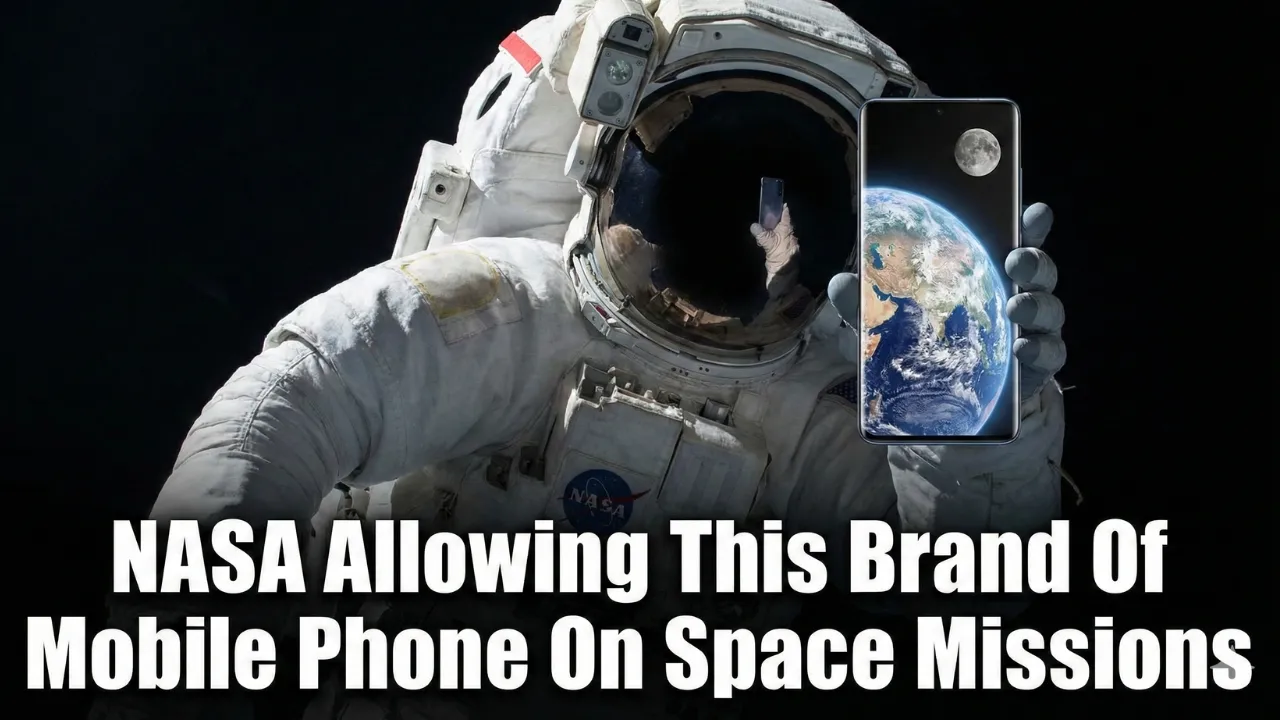
The National Aeronautics and Space Administration (NASA) recently made a seemingly small change that represents a significant step for space missions. In future missions, astronauts will be able to carry smartphones, including devices like the iPhone. This decision applies to missions that orbit the Earth or head to the Moon. NASA’s previous policy has been quite strict, with numerous restrictions on personal technology. However, this new change signals a new approach to NASA’s long-standing system.
Which missions will allow phones?
NASA Administrator Jared Isaacman confirmed this update on Wednesday night. He stated that astronauts on the Crew-12 and Artemis II missions will be allowed to carry smartphones. This change is a departure from NASA’s traditional approach, which has been extremely cautious about personal devices in space.
Previously, astronauts were allowed to use only a limited number of cameras, and personal phones were prohibited. This decision will make it easier for astronauts to record their experiences and share them with their families and the world.
Apple Calls It a Major Achievement
Apple also described this as a major achievement, noting that it will be the first time an iPhone has received official approval for long-term use in space. While it hasn’t yet been clarified which iPhone models will be eligible for this mission, this move is a significant technological breakthrough. This will reduce the need for astronauts to use separate cameras or older gadgets, allowing them to record photos and videos using their everyday devices.
Questions Raised on Outdated Rules
Jared Isaacman said that this decision is not just about convenience, but also challenges NASA’s outdated rules and slow processes. He explained that before any device can be taken into space, it must undergo testing for radiation, extreme temperatures, vacuum, vibration, and even the materials used inside the device. All of this is necessary for safety, but these regulations often delay technology updates. Therefore, NASA is now examining which regulations are truly necessary and which can be changed.
Smartphones will provide a better experience.
Before this change, the cameras designated for the Artemis II mission were considered quite outdated. For example, the latest Nikon DSLR cameras were from 2016, and the GoPros were also older models. With the advent of smartphones, astronauts will benefit from higher-quality cameras and improved video recording. This isn’t the first time a phone has been flown into space – the iPhone 4 flew on a Space Shuttle mission in 2011, but its use was limited. Smartphones are already being used on private missions such as Polaris and Axiom. NASA is now moving in this direction, and the first iPhone images from the Moon may be available soon.