
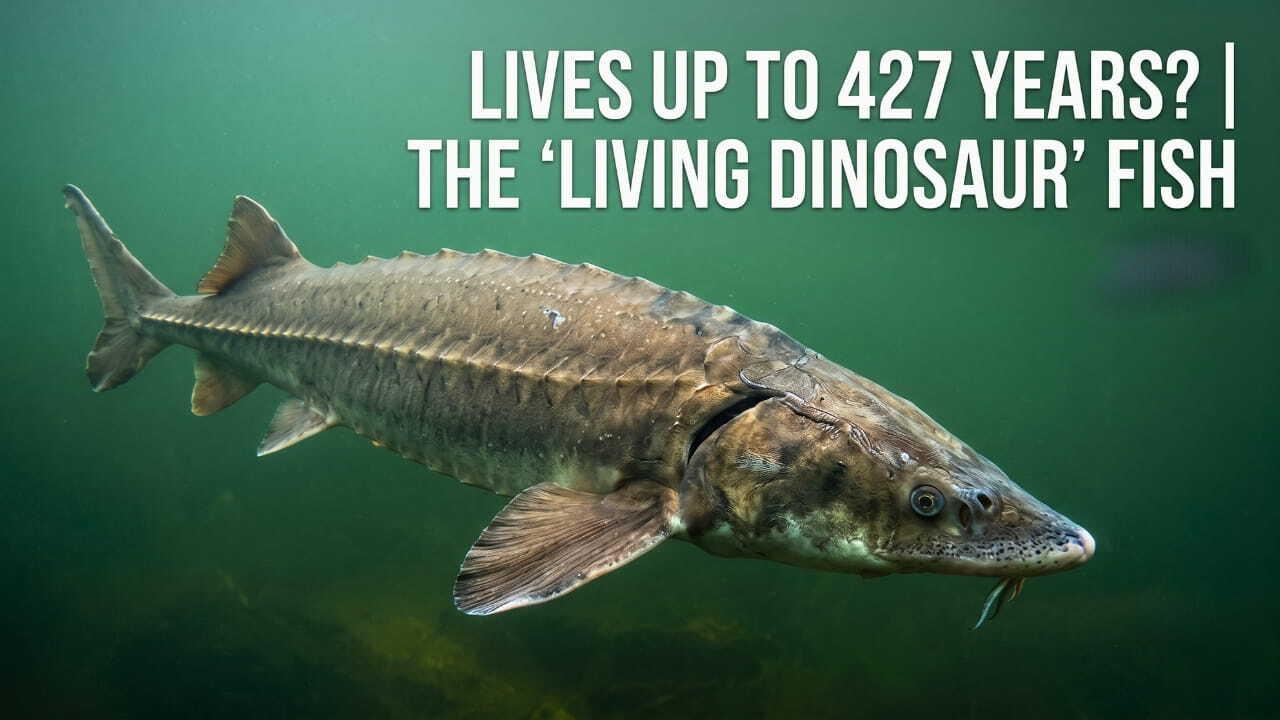

Many creatures in the world live many times longer than humans. But the estimated lifespan of a fish species has surprised even scientists. According to new research, this fish can live up to 427 years. This means it can live for several human generations. This is why it is also called the ‘living dinosaur’.
This fish can live up to 427 years.
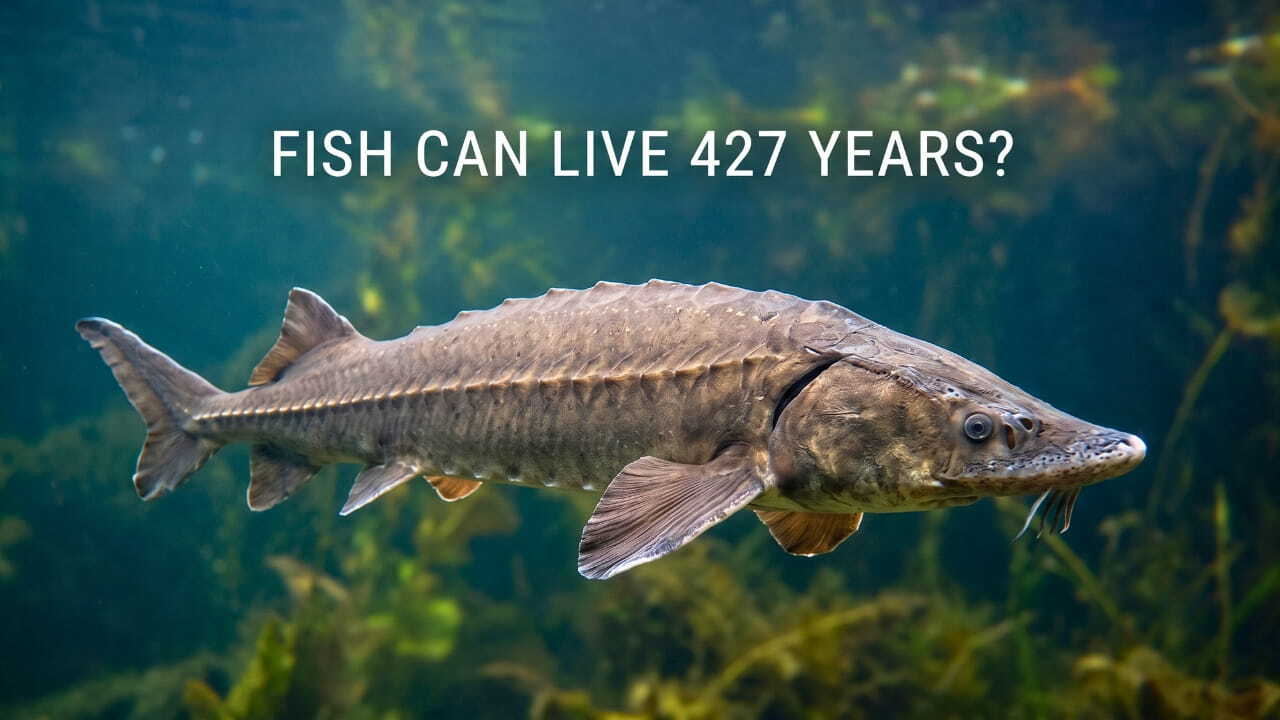
Surprising research has revealed that the lifespan of the lake sturgeon may be much longer than previously believed. Scientists studied populations of this fish in different areas. According to estimates, males can live between 90 and 279 years, while females can live between 99 and 427 years. Previously, the oldest lake sturgeon was estimated at 152 years old. According to new research, 152 years of age may not be exceptionally high for this fish, but rather the middle of its potential lifespan.
Why was it difficult to calculate age like a tree?
Scientists typically determine the age of fish by looking at certain hard, bone-like structures in their bodies. They count the tiny layers or markings that form on these structures each year. This method works for many fish, but the lake sturgeon presents a problem. These fish grow very slowly and live very long lives. As they age, the markings on their bodies become thinner and closer together. Therefore, it becomes difficult to determine the age of a fish hundreds of years old simply by counting these markings.
How did scientists estimate age again?
When the old method of estimating age proved difficult, researchers adopted a new method. They caught lake sturgeon at various locations, recorded their size and other information, and then released them back into the water, attaching tags for identification.
A few years later, when the same areas were surveyed again, several tagged fish were found. Scientists observed how much the fish grew in size over the years. Using this information, they estimated how many years it would take for a fish to reach a specific size. This means that scientists didn’t read the age of 427 years directly from a fish’s body, but calculated its probable age from long-term data.
A Fish Was Young at 150
This is the most surprising part of this research. Until now, a 152-year-old Lake Sturgeon was considered the oldest known fish. However, with new estimates, scientists say that fish of this species can live much longer. Scientists involved in the research found that the estimated lifespan of fish varied across locations. In some places, their average age was around 100 years. This means that fish reaching 150, or even 200, years of age may not be unusual for this species.
What is the secret to such longevity?
The question arises: how does this fish live such a long life? One major reason is that its annual mortality rate is very low. According to studies, the annual survival rate of the Lake Sturgeon is around 96-98 per cent. Simply put, each year a large portion of this fish population survives to the next year. This is why some fish can live for decades, and even centuries. In comparison, the survival rate of many other freshwater fish is much lower.
Age Approaching the Greenland Shark
If the 427-year estimate proves correct, the Lake Sturgeon will become one of the world’s longest-lived vertebrates. Vertebrates are creatures with a backbone. In this regard, it could rival the Greenland Shark. The Greenland Shark’s lifespan is estimated at 272 to 512 years. However, the lake sturgeon’s 427-year lifespan is not yet a directly proven age for a single fish. It is a scientific estimate derived from long-term data.
Fish longevity a major challenge for conservation
The significance of this discovery lies not only in the longevity of these fish but also in their conservation. Lake sturgeon grow very slowly, and their numbers take a long time to increase. If a large number of fish die, new fish cannot quickly replace them. Less than one percent of this fish’s historical population now remains in the Great Lakes. Problems such as fishing, dams, and habitat modification have all decimated their numbers.