
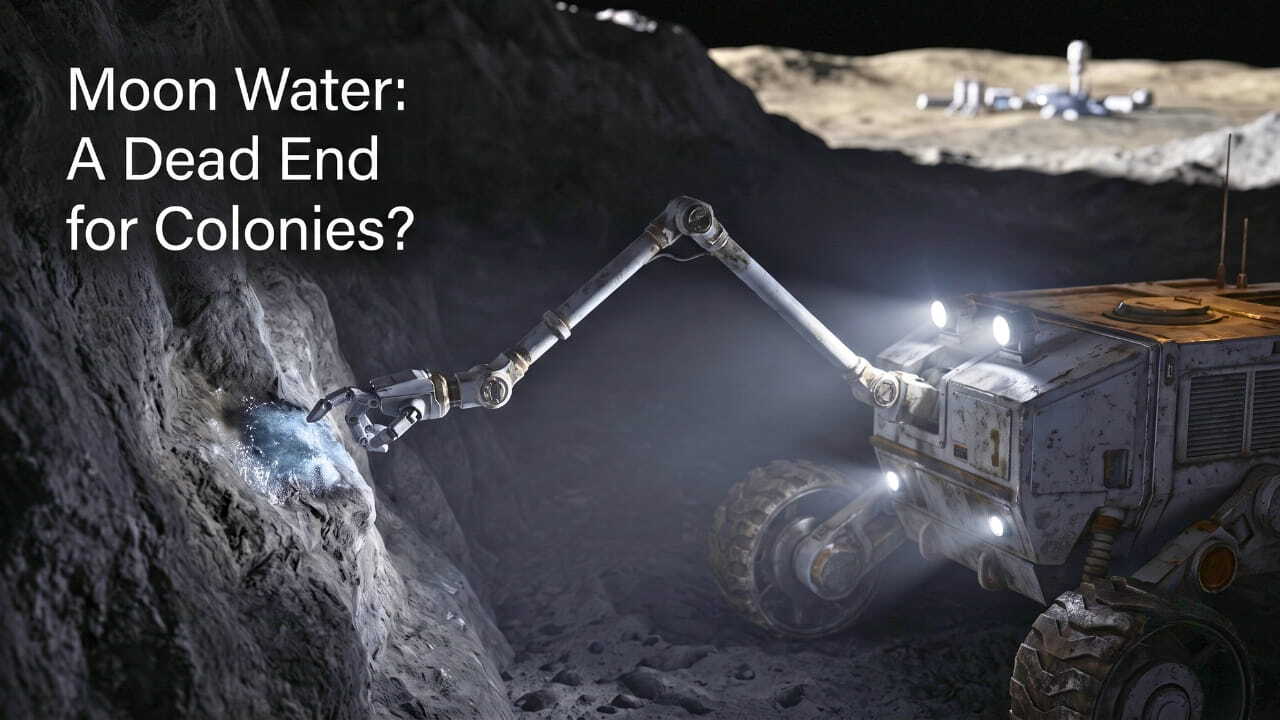

The dream of establishing human settlements on the Moon is slowly moving toward reality. Scientists have discovered water ice in craters in the Moon’s polar regions, where sunlight has not reached for billions of years. This water could be a crucial resource for future lunar bases, villages, and cities.
However, new research has raised a major concern about this dream. The Moon may actually contain much less water than previously thought. Some craters near the Moon’s poles remain perpetually dark. Temperatures can reach -163 degrees Celsius. In such cold conditions, water ice can exist for long periods without evaporating.
Water Discovered in 2013
Scientists have known about the presence of water in these areas since 2013. At that time, it was estimated that there could be up to one billion tons of water. However, new estimates suggest that the actual amount could be much less.
The Moon’s energy situation is not as difficult. The high elevations surrounding these craters receive sunlight for most of the year. Installing large solar panels here could generate significant electricity. According to scientists, solar panels could in the future be made from lunar silicon.
What is the biggest problem facing scientists?
The biggest problem is water. If a lunar colony of 1 million people is established and 1 billion tons of water are initially available, this reserve could be depleted within a few years without reuse.
Even if the water is recycled to 98 percent, this reserve could still be depleted in about a century. If the actual amount of water on the Moon turns out to be about 30 times less than currently estimated, this timeframe would be even shorter. Meanwhile, a small colony of 1,000 or 10,000 people could last much longer.
Scientists believe that improved water recycling, water-efficient technologies, bringing water from asteroids, or discovering new reserves hidden beneath the lunar surface could solve the problem. Therefore, finding more water may be the most important task before establishing a permanent lunar city.