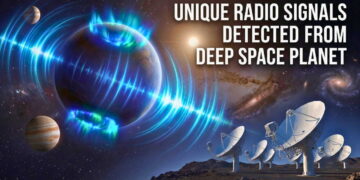



In the past few years, NASA and other scientists have discovered thousands of planets outside the solar system. Many of these planets are completely different from our Earth. Some are extremely hot, some orbit independently, and the winds and weather of some have surprised even scientists.
WASP-193b resembles a marshmallow
Scientists call WASP-193b the “marshmallow planet.” It is about 50% larger than Jupiter, but weighs much less. Its density is so low that scientists believe it could float if placed in a large ocean. Its gas layer is quite extensive.
WASP-103b is becoming like a lemon
WASP-103b orbits very close to its star. The gravity there is so strong that the planet’s shape has been stretched into a lemon shape. It is about 1,800 light-years from Earth. Its surface temperature can exceed 2,500 degrees Celsius, causing many substances there to turn into gas.
Rogue planets revolve without a star.
Planets typically revolve around a star, but rogue planets are not bound to any star. They wander independently in space. Scientists believe that some planets may have escaped their former systems. These planets remain dark, although internal heat may persist in some places.
Shadow-like darkness on WASP-12b
WASP-12b is considered one of the darkest planets. It absorbs approximately 94% of the visible light falling on it. Its temperature exceeds 2,500 degrees Celsius. Due to this heat, clouds cannot form here, and light, instead of reflecting, enters the planet’s interior.
Glass Rain Occurs on HD 189733 b
HD 189733 b appears to be a deep blue planet, but its colour isn’t due to water. It contains silicate particles. Temperatures exceed 1,000 degrees Celsius, and winds can reach nearly 5,000 miles per hour. Under these conditions, glass-like particles form and rain sideways in strong winds.
Lava Sea on 55 Cancri e
55 Cancri e is also known as the “lava planet.” It completes its orbit around its star in less than 18 hours. Its surface temperature can reach nearly 2,000 degrees Celsius. Scientists have found signs of molten rock and volcanic activity there.