
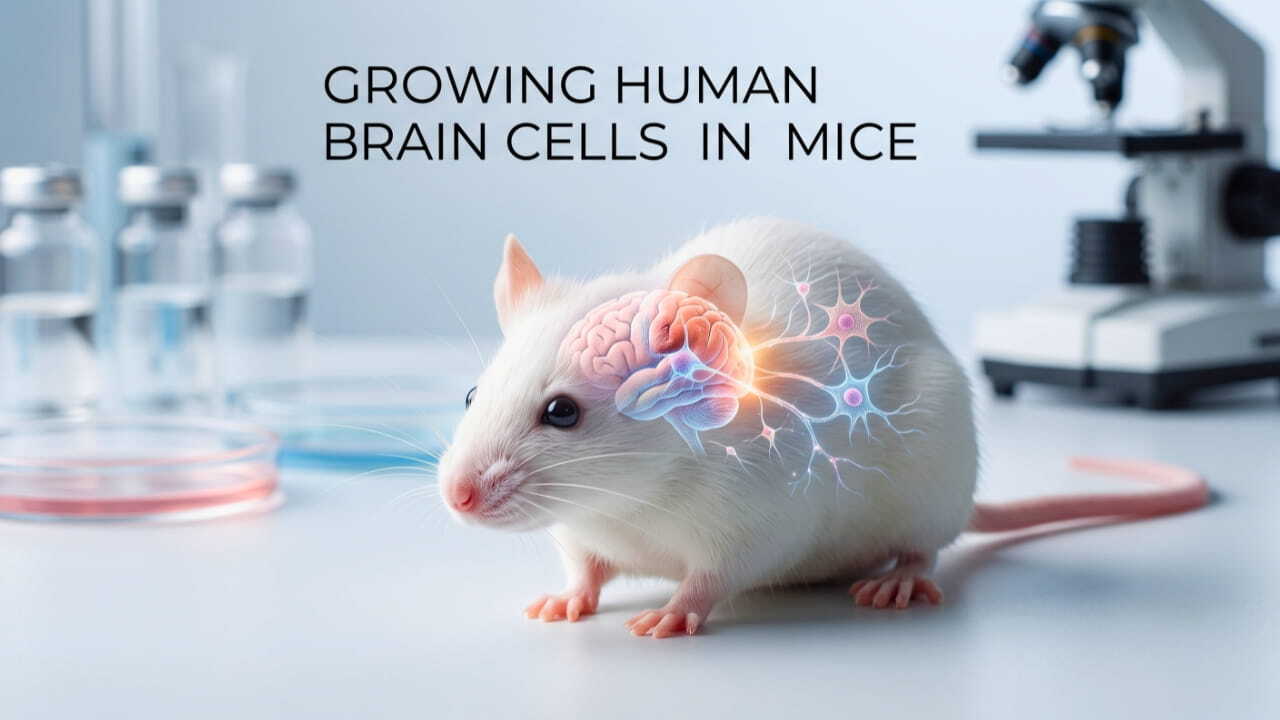

Understanding the human brain directly in the living body has long been a major challenge for scientists. Now, scientists have conducted an experiment in which human brain tissue grew into the brains of mice, filling a large portion of each mouse’s brain. This research was published in Nature on September 16th, and according to the researchers, it is the most comprehensive example of human brain cell integration in an animal to date. For this purpose, mice were genetically engineered to have the initial cells that form the cerebral cortex in their brains that did not survive.
Human Brain Cells
Human brain tissue was transplanted into the mice’s brains a few days after birth. Because there was no competition for space from other cells, the human tissue grew rapidly. Two to three months after the transplant, it had grown nearly fivefold and occupied more than 90 percent of the space. Furthermore, nerve projections from human cells reached the mice’s spinal cord, indicating that the human tissue also formed connections with the mice’s nervous system.
Amazing scene seen in the lab
Several types of specialised neurons developed in the human tissue. These included large, elongated cells resembling von Economo neurons. These types of cells are believed to be involved in social understanding in humans and some other animals. Significantly, such cells had not previously been seen in human brain tissue grown in the laboratory. Researchers say these cells are considered vulnerable to certain neurodegenerative diseases, particularly frontotemporal dementia.
Helps in understanding disease and medicine
Human brain organoids have helped understand early brain development, but they typically lack blood vessels and signals from the rest of the body. Human tissue grown in mice offers scientists a new way to study human brain cells in a living body environment. It could be used to understand diseases associated with abnormal brain development, such as cerebral palsy, and to test potential medicines. However, human-animal models like these also raise ethical questions, so the study underwent extensive review, including by independent bioethical committees. Behavioural tests showed no signs of increased intelligence in mice with human tissue.