

This Chinese experiment comes at a time when the United States, Japan, and other countries are also developing unmanned submarine systems. The United States has developed large underwater drones like the Orca, while Japan is also developing drones and new sensor technology to detect submarines.
China’s Major Undersea Achievement
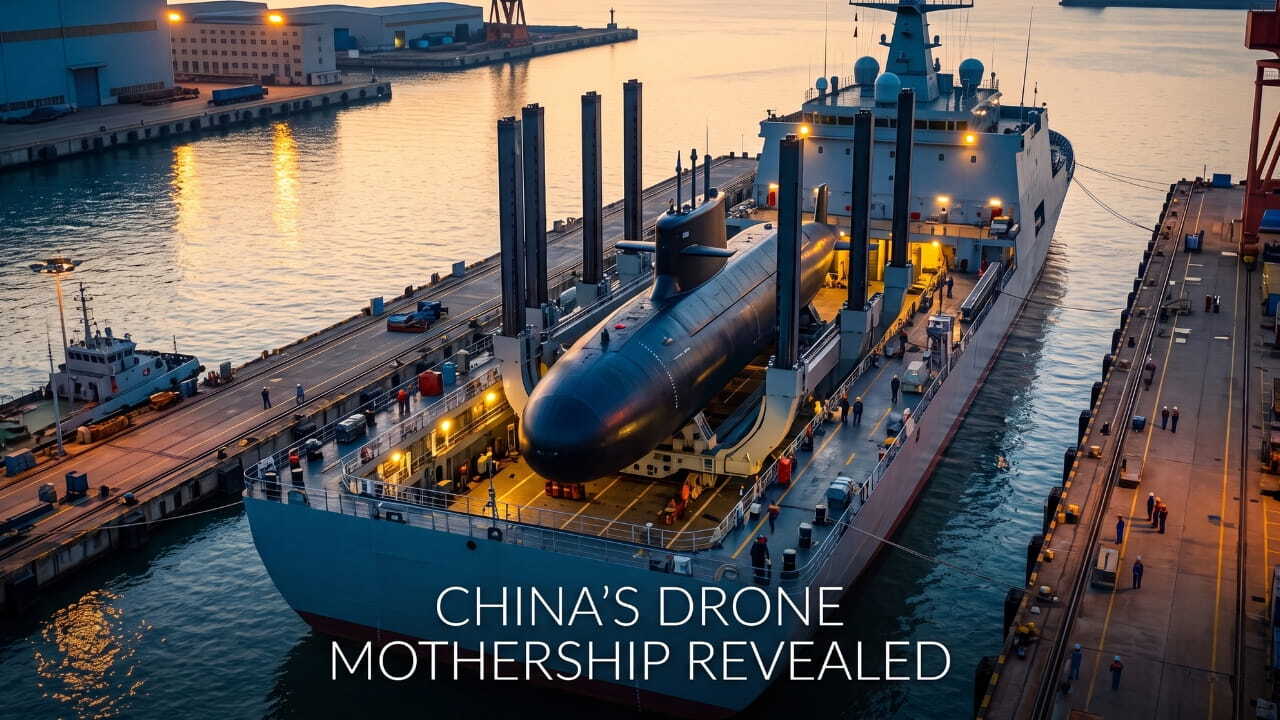
China has taken a major step toward transforming the way it conducts underwater warfare. Satellite images have revealed a highly specialised warship at a Shanghai shipyard. It is being designed to launch and retrieve large unmanned underwater vehicles (UUVs). According to a report in the British newspaper The Telegraph, this warship could simultaneously carry four large, weaponised, unmanned, submarine-like drones.
China is Building a ‘Drone Mothership’
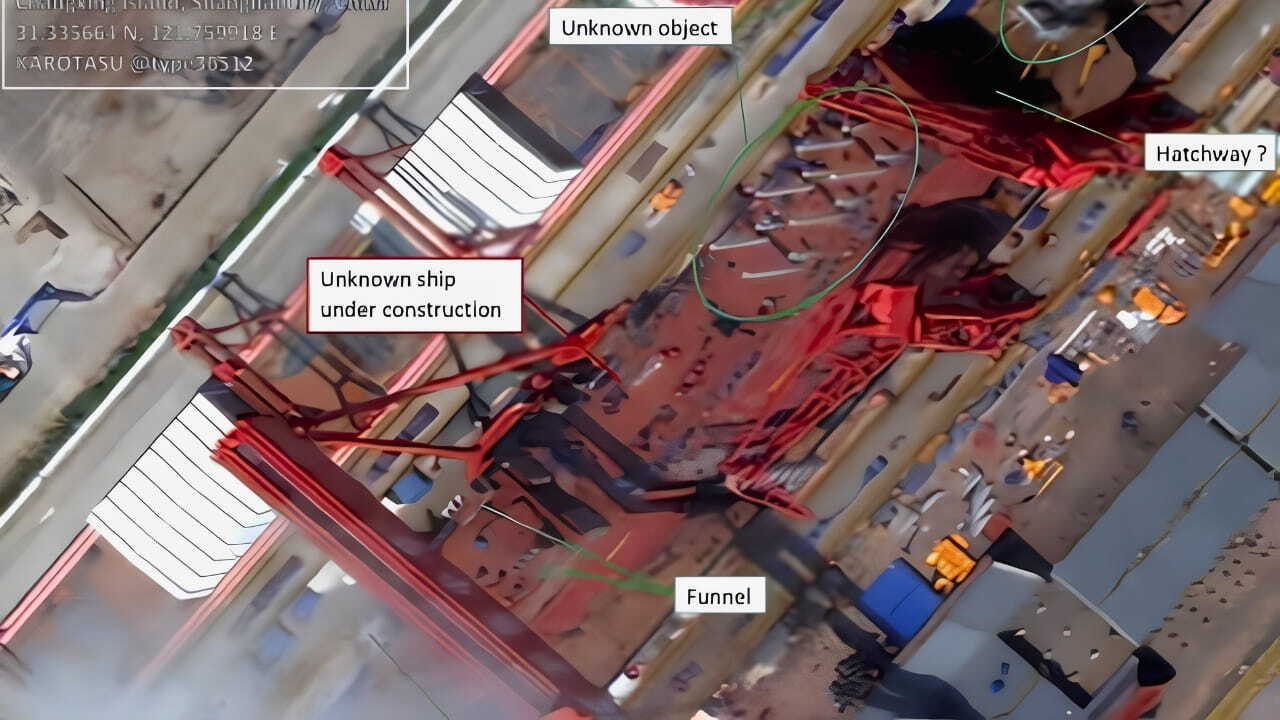
This warship is reportedly under construction at Shanghai’s Hudong-Zhonghua Shipyard. Its design is significantly different from a typical warship. According to Naval News, the ship features a special well-deck at the rear and a large internal hangar at the front. This system can be used to store large underwater drones inside the ship and then launch them into the sea.
The Mothership’s Special Recovery System
The drone mothership’s most distinctive feature is its launch-and-recovery system. According to analysis of available satellite imagery, a large cradle at the rear of the ship can be raised and lowered using approximately 12 vertical “jack-up” arms. This could help launch heavy unmanned submarines into the sea and bring them back to the ship after their mission is completed.
Four Huge Underwater Drones Simultaneously
The drones China is developing are many times larger than typical marine drones. They are being called Extra-Extra-Large Uncrewed Underwater Vehicles, or XXLUUVs. According to Naval News’ analysis, two such Chinese prototypes are reported to be approximately 35-45 meters long. This means they could be comparable in size to several small submarines.
The mothership is approximately 26 meters longer than the US Boeing
Comparatively, China’s mothership is approximately 26 meters longer than the US Navy’s Boeing Orca XLUUV. This makes them significantly advanced underwater vehicles. The larger size could benefit these platforms by allowing more space for fuel, sensors, communication equipment, and other mission payloads.
Longer missions at sea without crew
The biggest advantage of unmanned underwater vehicles is that they do not require a crew team. This means they could be deployed in oceanic areas where sending manned submarines for long-term surveillance or other high-risk missions would be too expensive or too dangerous. Such platforms could be used for undersea surveillance, intelligence gathering, monitoring sea lanes, sensor deployment, and potentially other military missions.
Will the challenge for the US and other countries increase?
This Chinese experiment comes at a time when the US, Japan, and other countries are also developing unmanned submarine systems. The US has developed large underwater drones like the Orca, while Japan is also developing drones and new sensor technology to detect submarines. At present, the exact capabilities of China’s new mothership, including its speed, range, and future weapons, are not fully disclosed. However, China is certainly developing an underwater warfare system that would allow multiple large unmanned submarines to be launched from a single large ship into the ocean.