

NASA Arctic Sea Ice: Is the Arctic Ocean’s sea ice, considered the White Crown of our planet, melting? NASA’s latest satellite images from space have raised concerns among scientists worldwide. Something is happening in the Arctic, considered the coldest and safest corner of the Earth, that could pose a major threat to all humanity in the future. The threat of global warming is now coming into view, and the vast Arctic Ocean, considered the White Crown of the Earth, is rapidly melting and shrinking.
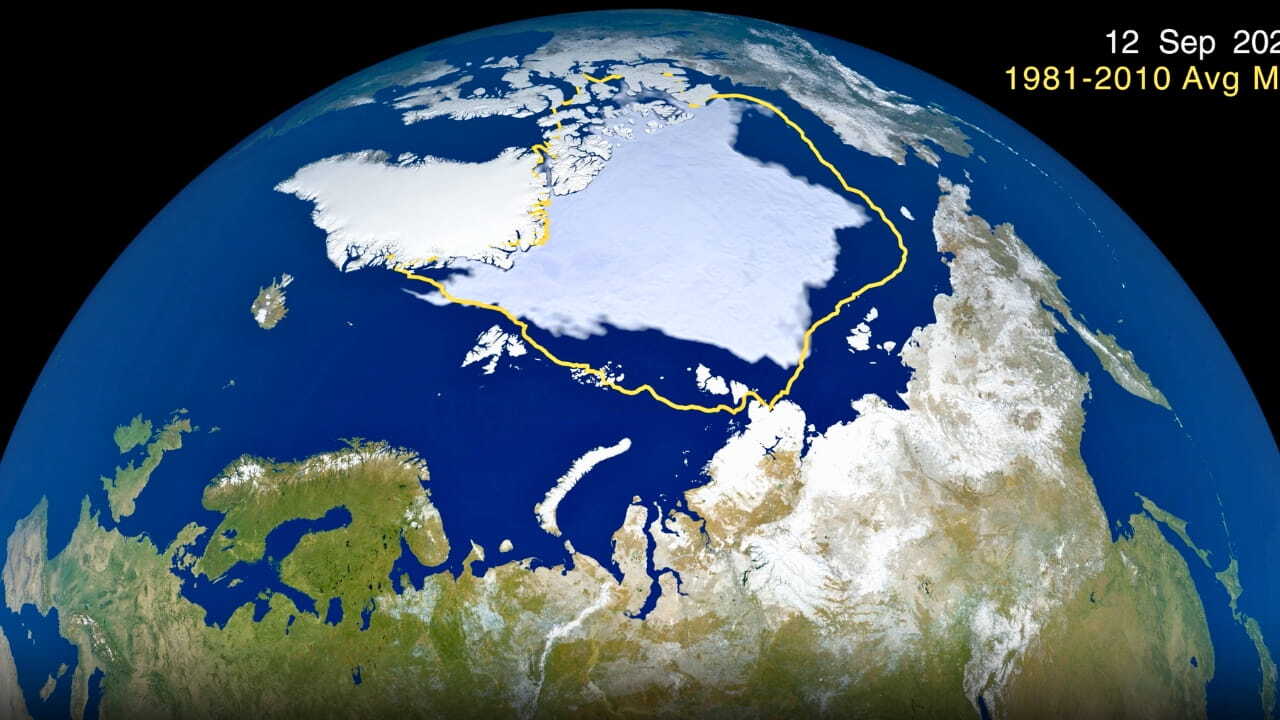
NASA satellite images and data clearly show a decline in Arctic sea ice this summer. According to NASA and the US National Snow and Ice Data Centre, the annual minimum level of Arctic sea ice was recorded on September 12th. At this time, the ice area was approximately 4.6 million square kilometres. However, this figure is preliminary and may change slightly due to climate change.
How much Arctic ice will remain in 2026?
During winter, seawater in the Arctic Ocean freezes, forming a thick layer of ice. Then, as spring and summer arrive, temperatures rise, and this ice begins to melt. NASA satellites are constantly monitoring this change. This year, Arctic sea ice reached its greatest extent on March 15th. Subsequently, it steadily declined throughout the summer, reaching its annual lowest level on September 12th. This area of 4.6 million square kilometres is approximately 1.4 times India’s area.
However, the data doesn’t just tell this year’s story. The 20 lowest Arctic sea ice extents have been recorded in the 20 years from 2007 to 2026. The lowest ice extent ever recorded in satellite records, dating back to 1978, was in 2012, at approximately 3.39 million square kilometres.
Arctic sea ice reached its yearly minimum extent on Sept. 12, 2026, @NASA and @NSIDC report.
The ice covered 1.78 million square miles, making it the 10th-lowest in the satellite record, tied with 2008, 2010, and 2025. https://t.co/RGqNQjD5hJ pic.twitter.com/r0br8gZQ6K
— NASA Earth (@NASAEarth) September 23, 2026
Why is Arctic ice melting?
According to scientists, the Arctic region is warming faster than the global average. Rising air and ocean temperatures directly impact sea ice. However, weather conditions vary from year to year, so the rate of ice melting may vary.
Sea ice extent has not declined significantly during September in recent years. According to scientists, increased cloud cover over the past decade has reduced the amount of sunlight reaching the ice. This has had some impact on the rate of ice melting in summer. However, this does not mean that Arctic ice has returned to its previous state.
Why is the Arctic important for India?
Arctic sea ice is not a problem limited to the polar region. White ice reflects a large portion of sunlight into space. When ice decreases, darker sea water absorbs more heat, which can accelerate warming.
Changes in the Arctic also impact its fauna and ocean conditions. Scientists are also trying to understand how rapid Arctic warming may impact weather and atmospheric activity in other parts of the world, including South Asia.
However, this doesn’t mean that every change in Arctic ice directly causes a particular summer or monsoon in India. Many different factors influence India’s weather. Nevertheless, this NASA satellite record shows that the Arctic is undergoing long-term change, and understanding this change is crucial for understanding future weather and climate around the world.